Why We Chose the Vision 484 and Hull Number One
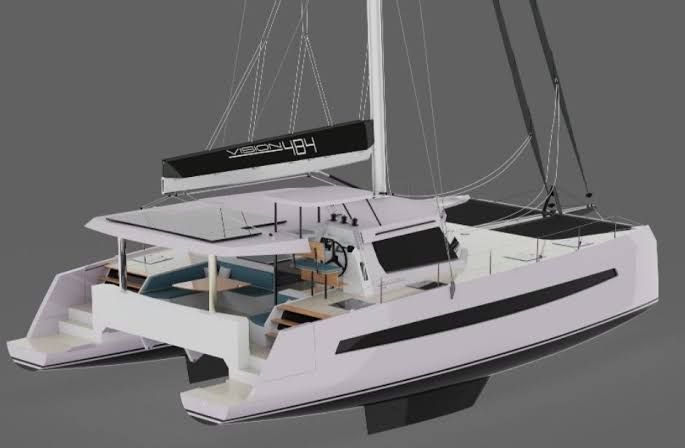
We went to Annapolis thinking we would buy a Vision 444. A new design, a lot of research, and one mimosa later, we signed for the first 484. Here is why.
I wanted to go straight over and sign. Kelly wanted a mimosa first.
We were at the Annapolis Boat Show in October 2024, and Vision had officially announced the 484 the day before. I was convinced someone else was going to get there first. Kelly thought we could take a few minutes to calm her nerves before committing to a boat that existed only in drawings and renderings.
We stopped for the mimosa. Then we signed for hull number one.
That probably makes the decision sound more impulsive than it was. A larger, offshore-capable catamaran had been part of our shared plans since we first got together. We had spent a lot of time thinking about what we wanted that boat to do and how we wanted to live aboard. The surprising part was that, until very recently, we thought we were buying a Vision 444.
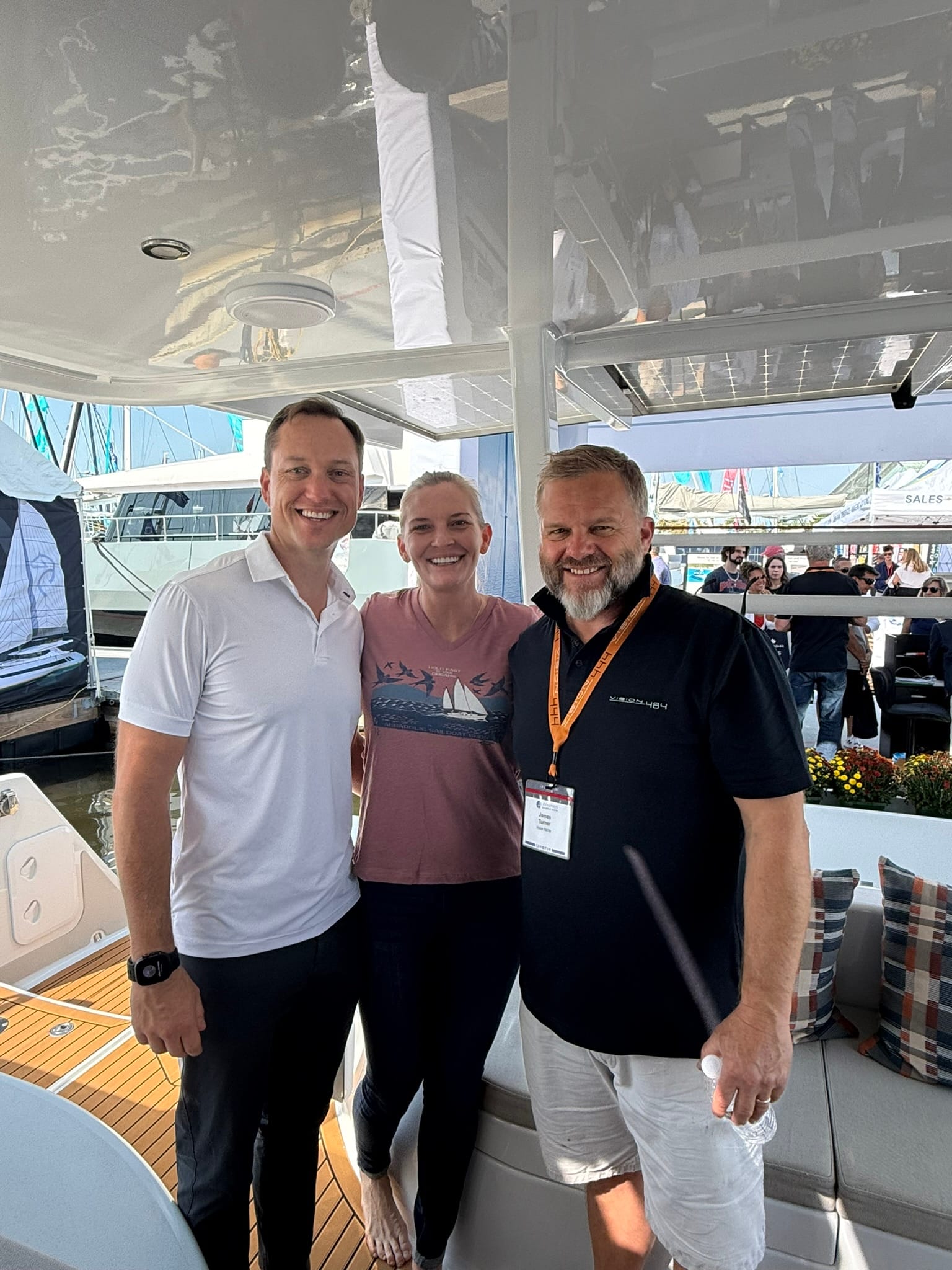
The boat we thought we were buying
We arrived at the show with four serious contenders: the Vision 444, HH 44, Balance 442, and Seawind 1370. Each had qualities we liked. Walking through them helped us work out which compromises we were actually willing to live with.
The HH was sleek and stylish, and the technology was appealing. I work in IT. I like electronics, and I am usually quite happy to spend time figuring out how something works. But the degree of integration gave me pause. I was not confident I could troubleshoot and repair problems without substantial technical support or parts that might be difficult to source wherever we happened to be.
The Seawind had a generous bow and trampoline area, but we felt that came at the expense of space in the salon and cockpit, where we expected to spend much of our time. The galley-down arrangement also did not suit us. With the galley in the salon, whoever is cooking can still follow the sailing and stay connected with people at the helm, inside, or out in the cockpit. Cooking down in a hull felt more isolated.
The Balance was beautiful and fast. But the hulls felt narrow to us, and we felt we were giving up more comfort for performance than we wanted. I also did not particularly like the layout of the upper helm. Those are personal preferences, but they matter when the boat will be your home.
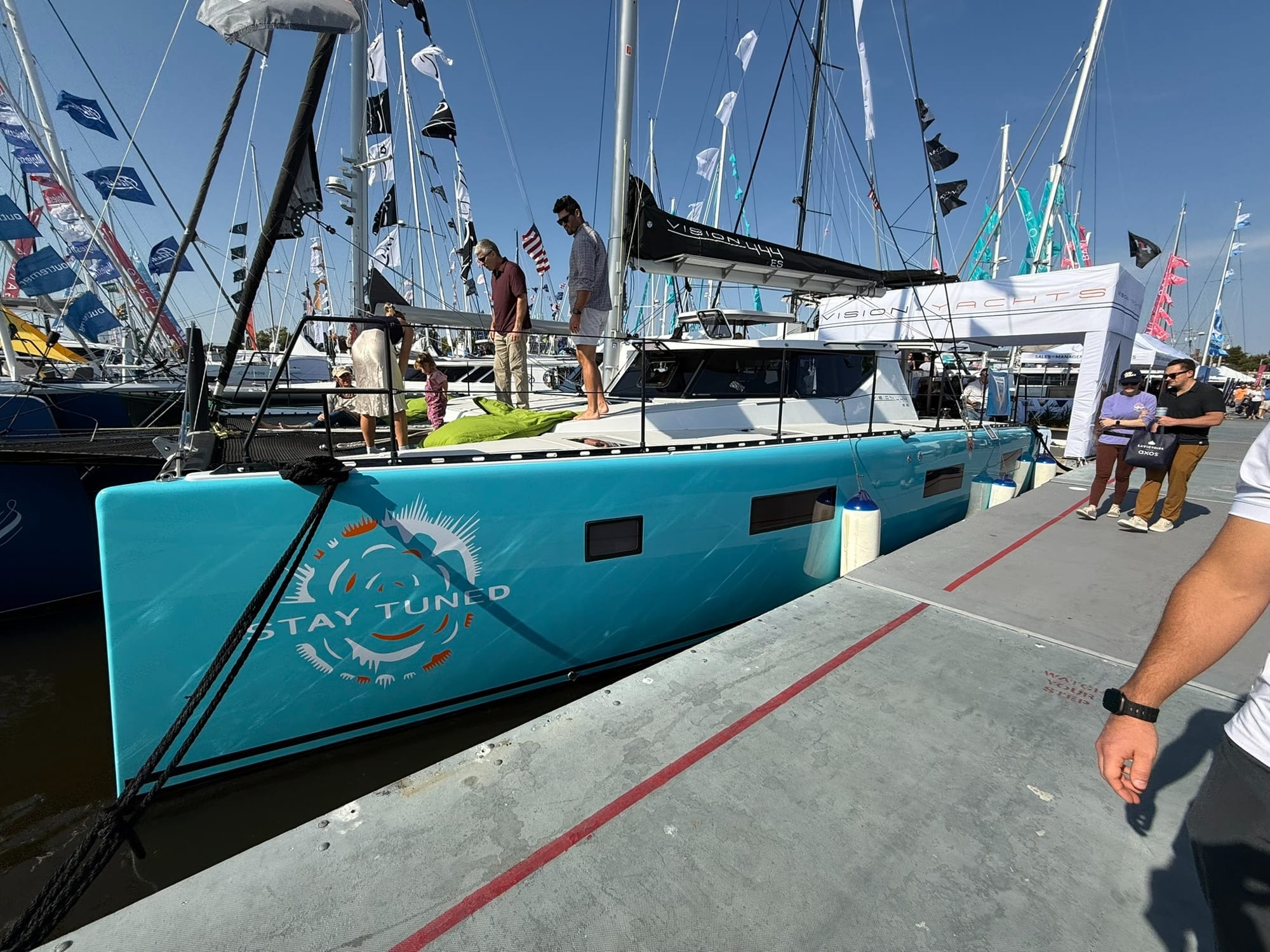
Then there was the 444. We loved it. Spending time aboard Stay Tuned on the docks gave us a real boat to walk through and a much clearer sense of what living aboard could look like. Of the boats we were considering, it was the one that felt right.
Why go bigger
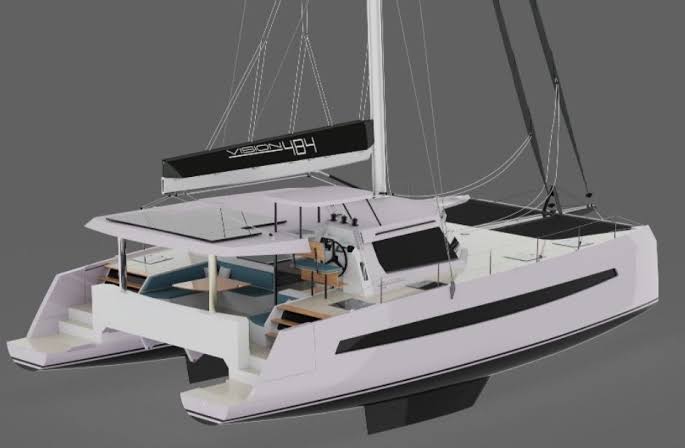
The 484 offered the possibility of getting the things we loved about the 444 with more room for the life we wanted to bring aboard.
We were choosing the boat for a long stretch of our lives. A little more length meant the possibility of more usable living space, more storage, and more room to move around without feeling as though everything had to compete for the same corner. We liked the 444 enough to buy one. The prospect of a larger boat built around that same philosophy was hard to pass up.
Kelly was looking at this through a very practical lens: safety at sea for us and the dogs, comfort at anchor, and enough room to store and haul the toys that would let us explore wherever we went. We wanted a boat that could carry us to remote places and support the adventures once we got there.
She was also paying close attention to all the places to lounge. Offshore capability matters, but so does having somewhere comfortable to enjoy the anchorage you crossed an ocean to reach.
Technology we can live with
One of the questions behind our choice was simple: what happens when something stops working?
I kept picturing the two of us somewhere in the southern Bahamas, trying to sort out a critical problem. I did not want the answer to be waiting weeks for a specialist to fly in with a proprietary part. That concern shaped how I looked at the boats and their systems.
Vision’s approach made sense to me. Wiring run through conduit is the sort of detail that may not get much attention on a boat-show tour, but it matters when you need to trace a cable or work out where a problem starts. I want to be able to understand the systems aboard our boat and get access to the things I might need to repair.
The same thinking drew us toward conventional mechanical diesels and cable throttles rather than more electronically dependent arrangements. Mechanical systems can fail too, and I am not assuming every problem will be something I can fix. But I value being able to trace a problem, understand the mechanism, and have a reasonable chance of finding a solution without a specialist laptop.
Neverland will have plenty of technology. The distinction for me is how much of the boat needs that technology to function, and what options we have when it does not.
The risk of being first
Buying hull number one meant accepting some substantial unknowns. We could walk through a 444, but we could not walk through a 484. We could study the renderings, but we could not know exactly how the finished spaces would feel or how every detail would take shape.
There is also the familiar concern about a first boat: some of the kinks will only become apparent as it is built and used. A drawing can look convincing without answering every question that comes up at full size. We knew the final production boat would develop along the way.
We did not have a way to make all of that uncertainty disappear. What we had was confidence in the boats Vision was already producing and in the team behind them.
That confidence came from multiple conversations with James Turner and with current owners. We talked about design philosophy, structure, and how the boats behaved out on the water. Hearing from people who were actually sailing and maintaining their boats mattered to us.
Kelly also watched the walkthrough series and seemingly every Vision video on YouTube about a thousand times. She dissected them for small details, looking at how the spaces worked and what the camera happened to reveal in the background. By the time we signed, there had been a lot of research behind the nerves.
Being first also offered something we wanted: more interaction with the team and more opportunity to help shape the initial design. That did not cancel out the risk. It helped make the risk worth taking for us.
Building around the two of us
Most of the time, the people handling Neverland will be Kelly and me. We wanted the conversations about layout and equipment to start there.
Where do we need to move while sailing? How do we get to the helm and handle the sails? What will still feel manageable when one of us is tired? A feature can look great in a rendering and still be awkward when two people are trying to use it offshore.
We appreciated the yard’s willingness to understand how we would use the boat rather than simply hand us a rigid checklist of options. As the build has progressed, that collaboration has given us opportunities to discuss the spaces and work through ideas with the people making them.
It has also meant listening when James explains why something was designed a particular way. Having input is valuable. Having an experienced builder willing to tell me when an idea might cause trouble is valuable too.
What we learned after signing
Our later visits to Knysna and time sailing aboard Visions gave us more reasons to feel good about the decision. They came after the commitment, so they cannot be the explanation for signing at Annapolis. They have been an important part of understanding what we bought into.
Under sail, I appreciated how solid and quiet the boats felt. At the factory, we could see the structural work before it disappeared behind the finishes. The emphasis on watertight compartments and sacrificial sections in the bows made the safety philosophy much more tangible than it had been in conversation.
Kelly’s concern about keeping us and the dogs safe was never going to be answered by one feature or one specification. Seeing how the structure, layout, and working spaces fit together helped us understand the approach behind the boat.
The people in the yard reinforced that feeling. There was pride in the work, including among the fairing and paint crews whose effort is easy to overlook once a boat is finished. Seeing team members wearing shirts from previous owners’ launches said something about their connection to the boats leaving the factory.
The owners’ community mattered as well. The people we spoke with were using their boats, working on them, and sharing what they had learned. An owner network that will help with a part number, a photo, or a troubleshooting question is a useful thing to have when your home moves from country to country. We wanted that relationship with both the yard and the other owners to continue beyond handover.
Why hull one made sense for us
Neverland is still being built. We cannot finish this story by saying every decision has been proven right, because we have not launched her or lived aboard her yet.
What we can explain is why we made the choice. We found a boat we loved in the 444, saw the opportunity for more of what we wanted in the 484, and felt comfortable with the people who would be turning those drawings into our home. We understood that being first would bring uncertainty, and we wanted the chance to be involved as the design became a real boat.
At Annapolis, I was worried someone else would get there first. Kelly wanted a mimosa before we did anything rash. We both wanted the same future, and we had found the boat we wanted to take us there.